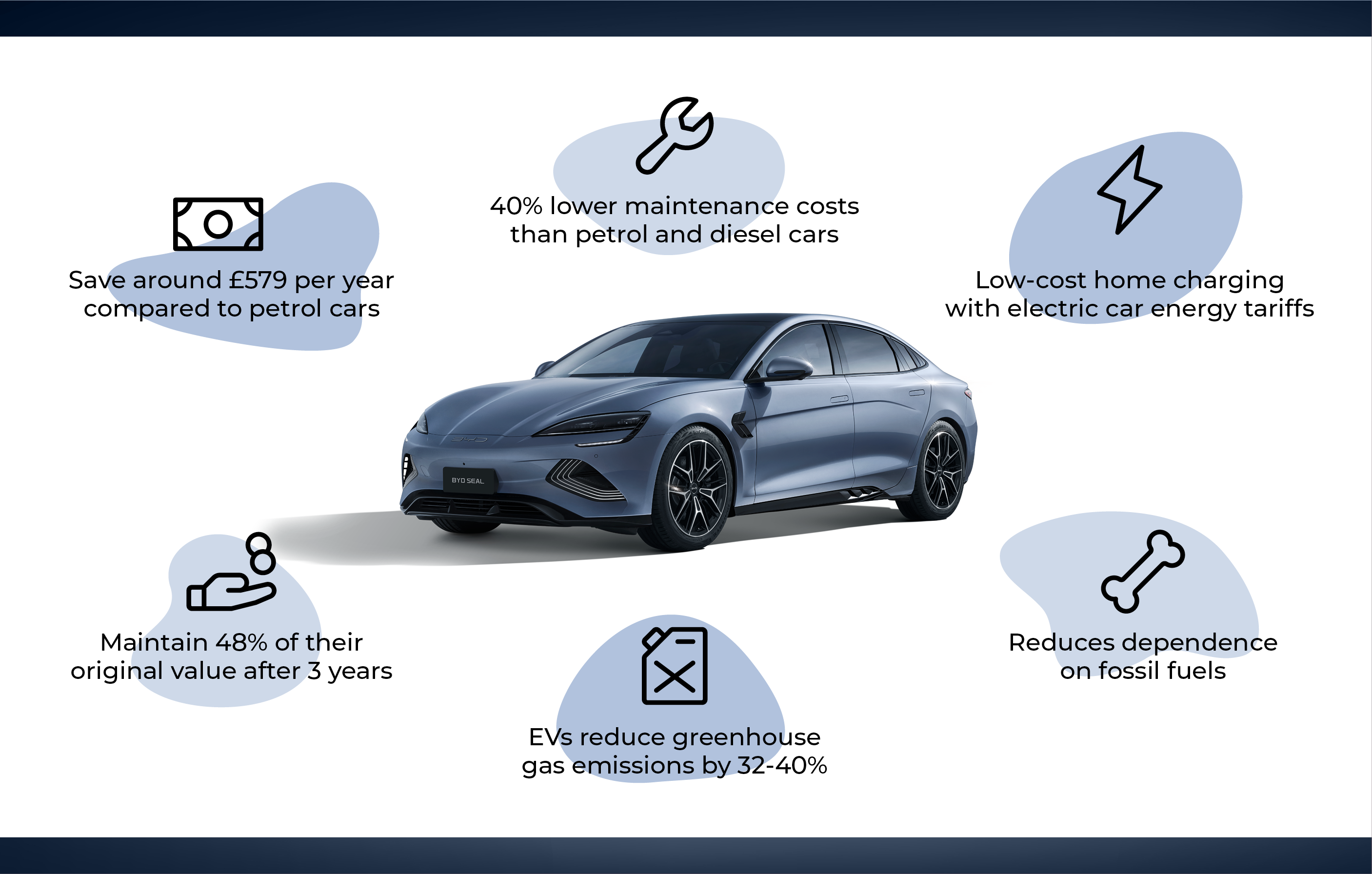
Electric cars can save drivers around £579 per year compared to petrol cars, which is one of the main ownership benefits of EVs. Reduced pollution and improved driving experience, as well as government incentives and rapidly improving infrastructure, make electric cars more attractive to drivers. Lower maintenance costs also mean fewer potential issues over an EV’s lifespan. This guide will explain more about the benefits drivers can experience with an electric car. 


Electric driving initially started as an incentive to help the environment and reduce carbon emissions. But over the years, technology has advanced, and the benefits of driving all-electric have become more evident. 

01
Financial benefits of electric cars

On average, research shows that electric cars are around £500 cheaper annually compared to petrol cars. The average cost of running an electric car is approx. £1,000, in comparison to a petrol car, which equates to around £1,800

Lower operating costs
According to Energy Savings Trust, EVs have 40% lower maintenance costs than ICE Cars. Electric vehicles have fewer moving parts than petrol and diesel engines, which could mean lower maintenance costs over the vehicle’s lifespan.
Reduced fuel costs
Running an electric car costs are typically less than running a car with an internal combustion engineas drivers won’t be filling up with fuel. This cost can be reduced further if the EV driver has access to lower electricity rates or public charging stations.
Government incentives
Some governments offer incentives to promote the purchase of electric vehicles. These incentives may include rebates, tax credits and grants ,which can reduce the overall cost of purchasing electric cars.
Lower taxation
Governments in various regions have implemented lower taxation incentives for those purchasing electric cars. This could include reduced registration fees which can have a positive impact on long-term savings.
Resale value
Electric vehicle technology is constantly improving, and in the future, it’s expected that electric car resale value is likely to become more competitive as interest in these vehicles increases.
02
Environmental benefits of electric cars
Electric cars produce lower or zero tailpipe emissions, reducing greenhouse gas emissions by around 50% over their lifetime compared to internal combustion cars.

EVs also produce less sound pollution. Electric cars are almost silent when travelling at low speeds, and manufacturers are required under EU law to include a low-speed noise. This means that when travelling under 12 miles per hour or reversing, the vehicle will make a low humming noise to alert passersby to the car’s presence.

The more drivers that switch from ICE vehicles to electric cars, the more we can reduce our dependence on fossil fuels, mitigating the production of oil extraction and transportation. This makes EVs beneficial for the future.
03
Driving and performance benefits of electric cars

When considering the advantages of electric vehicles, it’s essential to consider the driving and performance benefits, so you can be sure you’re choosing a vehicle that suits your needs.

Instant torque
Electric cars power more efficiently for instant torque, meaning you can benefit from fast acceleration and responsive performance. This makes driving more enjoyable, especially in urban areas.
Smooth and silent drive
Due to the electric internal motor, electric cars generally offer a smoother, quieter driving experience for a comfortable, peaceful journey.
Low centre of gravity
Electric vehicles have a low centre of gravity due to their heavy battery. This enhances stability and handling making electric cars feel more agile and responsive while driving
Regenerative braking
This is when an electric vehicle converts kinetic energy into stored energy in the battery when the driver slows down or brakes. This helps to increase energy efficiency and extends brake life.
Advancements in technology
As developments are made in electric vehicle technology, improvements will be made to battery efficiency, range, and charging infrastructure which will enhance the overall driving experience.

BYD is pioneering advancements in electric car technology, with all-electric car models — including the BYD DOLPHIN and BYD SEAL — boasting a high-efficiency heat pump system for improved low-temperature driving range. These electric vehicles also feature the world’s first mass-produced 8-in-1 powertrain, which optimises space within the models and enhances efficiency. 
04
Should I buy an electric car?

The market for electric cars has changed over the last few years, as technology has improved and driving electric cars has become more popular. Because of this, there are so many models and options to choose from to suit you.

Usage patterns

Evaluate your typical driving patterns and daily commute. This can help you to determine the type of electric vehicle you’ll need, and whether an electric car is a practical and cost-effective option.


For those covering longer commutes, the BYD ATTO 3 should be considered. If you’re looking for an EV to make short trips, you could also explore the BYD DOLPHIN .

Charging infrastructure

Consider the availability of charging stations in your area , including charging points at home, work, and public locations. This means you’ll be able to charge your car easily, so it’s ready whenever you need it. Your range requirements are also important. This refers to how far your car can travel on a single charge. Consider this when choosing your electric car.

Vehicle models and features

Research available electric car models, their features, and performance to help you find a car to suit you. Think about cargo space, technology, and driving experience to ensure your electric vehicle meets your expectations.

The decision to buy an electric car depends on personal preferences — to determine whether an electric car is right for you, you must weigh up the benefits of electric cars, with the potential downfalls.


From reducing emissions to lowering operating costs, the advantages of electric vehicles are clear. In the future, more of us may find ourselves charging our cars, rather than fuelling them.

Benefits of an electric car FAQs

How much could I save by switching to an electric car?

On average, EV drivers can save around £500 per year on fuel. The exact amount will depend on the EV, your electricity tariff and fuel prices. This is due to electricity costing less per mile than fuel.

Will I save money on maintenance with an EV?

You could be looking at paying around 40% less for maintenance costs when switching to an electric car. EVs have fewer moving parts than cars with an internal combustion engine, which means there’s less to replace, and typically less that can go wrong.

How much does it cost to charge at home?

This depends on your energy provider and your energy rate. Typically, charging at home costs less than using a public charger. Some energy providers offer EV-specific tariffs for cheaper overnight charging. It’s best to check this when having a charger installed.

How much does it cost to tax an electric car?

You’ll pay £10 for the first year of your EV's life, increasing to £195 annually for cars registered after 1st April 2017. Electric cars were previously exempt from vehicle tax until VED changes introduced in April 2025.